
The Editor
-
Posts
978 -
Joined
-
Last visited
-
Days Won
25
Content Type
Profiles
Forums
Downloads
Gallery
Events
Store
Everything posted by The Editor
-
I would like to get knowledge of the Vedas. There are multiple scripts and upanishads, so I would like to know in what order I can study them . Please through some light on this. Thank You. Namaskara. Thank you for writing. In general the best place to start is with the Bhagavad Gita. Sri Shankaracharya has described Bhagavad Gita as follows in his Gita Mahatmya: sarvopanishado gavo dogdha gopala-nandanah partho vatsah su-dhir bhokta dugdham gitamritam mahat "All the Upanishads are like a cow, and the milker of the cow is Lord Shri Krishna, the son of Nanda. Arjuna is the calf, the beautiful nectar of the Gita is the milk, and the fortunate devotees of fine theistic intellect are the drinkers and enjoyers of that milk." The Bhagavad Gita contains the essence of all Upanishads and all Vedic knowledge. In the Gita Lord Krishna states: vedaish ca sarvair aham eva vedyo vedanta-krid veda-vid eva caham "By all the Vedas, I am to be known. Indeed, I am the compiler of Vedanta, and I am the knower of the Vedas." The purpose of the Vedic knowlege is to know Bhagavan, the supreme source of all existence, creation, maintenance and dissolution. The Bhagavad Gita provides this knowledge in an essential form, making it easy for people in modern times to understand. That was the very reason Lord Krishna spoke Bhagavad Gita just prior to the beginning of Kali Yuga. Knowing that humanity will find it difficult to understand the Vedic knowledge due to various problems of the age, He presented the essence in a simple and concise manner known as Bhagavad Gita, or Gitopanishad. If you have already completed study of Bhagavad Gita, then you can continue through various Upanishads, and it will make the further study simple and clear. I am not sure which city you live in, but our ashram is conducting weekly Bhagavad Gita classes in Chennai every Saturday at 7pm. The address is Panchamukha Anjaneyar Temple, 28 Yerikarai Street, Tharamani, Chennai (just off Tharamani-Velachery 100 foot road). Yours in service, Jahnava Nitai Das Bhaktivedanta Ashram http://www.bvashram.org
-
The soul is defined as immovable, then how does it transmigrate to another body after death? When unchangeable how does it contain deeds of the present life to display in the next. When unthinkable how can it be realized, etc. Namaskara. Thank you for writing. The soul moving to another body is only conceptual as the soul is not situated within matter and space. The soul remains eternally pure and untouched by matter, but its energy known as consicousness (chitta) becomes contaminated by the three gunas of prakriti resulting in all the states of experience in the material world. It is something like a person using a virtual reality system, projecting his consciousness into a virtual world which does not actually exist (hence the world is referred to as maya). Thus when our body walks around in this 3D world of matter, our soul is not moving around within the same 3D space. The space itself (akasha) is a material product created from sound according to Vedic sankhya philosophy. Beyond that is another space known as chid-akasha. The soul is existing beyond both of these fields of space and is not contained within them. Just as the soul isn't moving as your body walks around and moves in this world, so in the same way, at the time of death, when the soul "moves on" to another body, it is not moving at all, as it is not existing within this material space. What moves is a secondary material body known as sukshma sharira, or subtle body, which contains the material mind, intelligence (buddhi), identity (ahankara), the prana (life airs), the 10 senses (in sukshma form), and one's record of karma (papa and punya) recorded within this subtle unit. Just as the physical body moves within material space, so this subtle body also travels in the subtle space and is joined with another suitable vehicle (the next body) in seed form, where these individual components can manifest into the physical realm in the form of the next body for carrying out action and reaping the results of past action. In all of this, the soul (atma) remains eternally pure and untouched, just as the paramatma seated along side him also remains eternally pure and untouched. If the soul will withdraw his energy (consciousness) from projecting outward towards the matter, he will be liberated from this state of apparent virtual bondage. In brief this is how the soul remains eternally pure yet apparently conditioned and bound, and how the soul though beyond movement appears to be moving within this world. Yours in service, Jahnava Nitai Das, Bhaktivedanta Ashram http://www.bvashram.org
-
Does "tantra" only refer to vamachara with panchamakaras or is there more to it? Namaskara. Thank you for writing. Tantra can refer to dakshinachara, vamachara, or even vaishnava pancharatra marga. Unfortunately today it is misunderstood to only refer to vamachara, which in reality is a small minority and not recommended in most scriptures. Yours in service, Jahnava Nitai Das Bhaktivedanta Ashram, https://www.bvashram.org
-
-
-
-
Manu Smriti in Sanskrit with English Translations (PDF) View File The book Manu Smriti in Sanskrit with English Translations in PDF format. Submitter The Editor Submitted 02/20/2020 Category English Translations of Vedic Texts in PDF
-
-
-
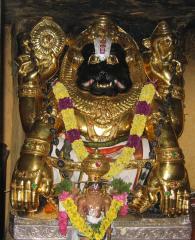
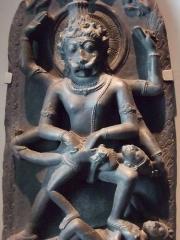
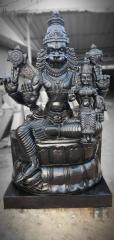
madurai_yoga_narasimha_moolavar_gaja_giri_kshetram.jpg
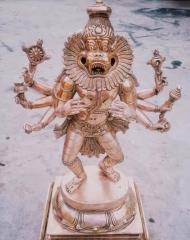
The Editor posted a gallery image in Pictures of Lord Narasimha
-
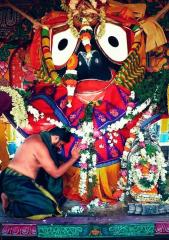
Pictures of Thiruvalanchuzhi Temple
Images added to a gallery album owned by The Editor in Pictures of Temples and Holy Places
-
-
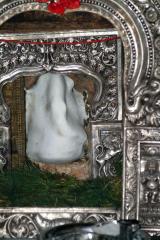
From the album: Pictures of Thiruvalanchuzhi Temple
-
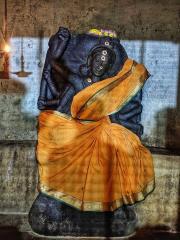
From the album: Pictures of Thiruvalanchuzhi Temple
-
-
-
-
-
-
-
-
-
-